
Human Optimization Technology 2026: The Systems Architecture of the Modern Self
The era of “wellness” is dead. In its place, a more rigorous, data-dependent discipline has emerged: Human Optimization Technology. For the modern high-performer, health is no longer a vague pursuit of “feeling good.” It is an engineering challenge.
We have moved from the “black box” era of biology—where we guessed which supplements worked or how much sleep we needed—into the era of the Quantified Self 2.0. Today, our biology is readable, trackable, and ultimately, hackable.
To master this landscape, we categorize the technology into four critical pillars: Wearable Tech, Biohacking Apps, Brain Performance, and the Optimized Environment. This is the technical blueprint for the 2026 human upgrade.
The Four Pillars
- Wearable Tech: Real-time Biometrics.
- Optimized Environment: Your Home, Upgraded.
- Brain Performance: The Edge You Need.
- Biohacking Apps: Data-Driven Insights.
Pillar 1: Wearable Tech – The Hardware Layer
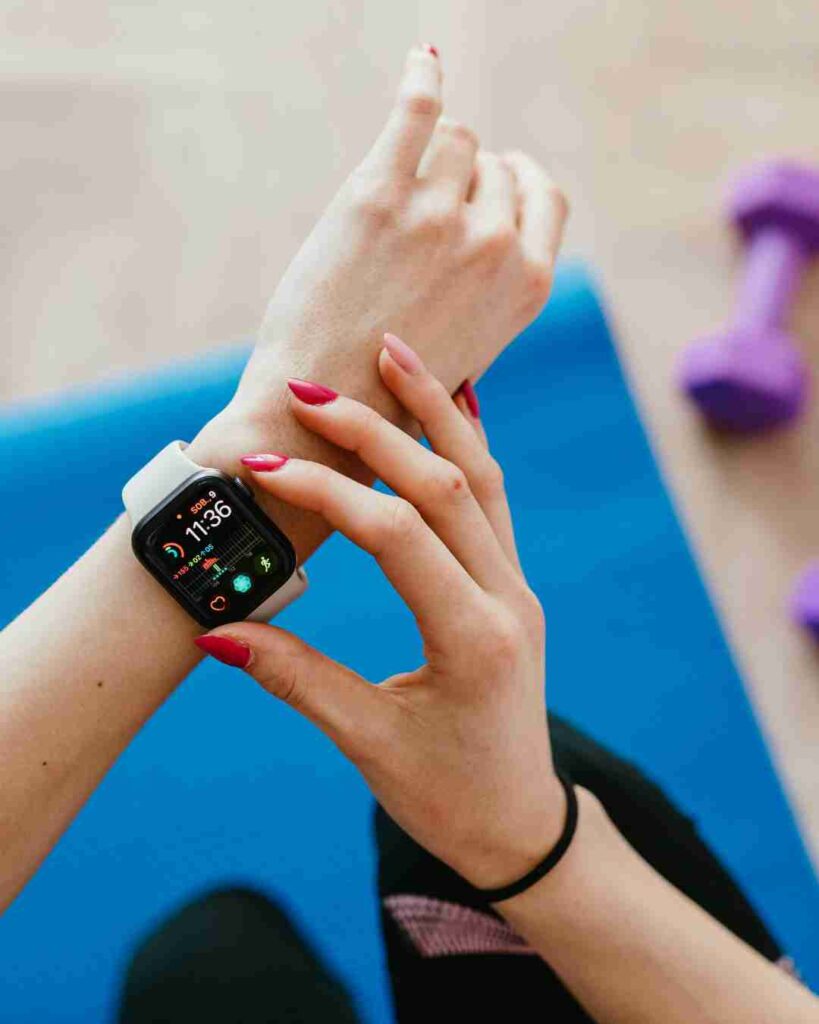
Wearables are the “sensors” in our biological stack. In 2026, the market has moved beyond simple step-counting toward Clinical-Grade Continuous Monitoring.
The Rise of the Smart Ring Ecosystem
While smartwatches remain popular for fitness, the Smart Ring has become the gold standard for 24/7 recovery tracking due to the high density of blood vessels in the fingers.
- Oura Ring 4: The 2026 flagship has integrated “Circadian Alignment” scores that don’t just tell you when you slept, but how your sleep timing matches your genetic chronotype.
- Samsung Galaxy Ring 2: Now features seamless integration with medical-grade CGMs, allowing users to see exactly how a poor night’s sleep affects their next-day glucose spikes.
Beyond Movement: Specialized Biometric Sensors
The “Rabid” optimizer now looks for hardware that tracks unconventional markers:
- Pulsetto FIT: A 2026 leader in Vagus Nerve Stimulation (VNS). It uses ultra-low radiofrequency to shift the nervous system from “Fight or Flight” to “Rest and Digest” in under four minutes.
- Whoop 5.0: The latest iteration has ditched the screen entirely in favor of a “Skin Temperature and Sweat Composition” sensor, identifying electrolyte imbalances before they lead to muscle fatigue.
2026 Smart Ring Technical Showdown
Clinical accuracy meets consumer hardware: A spec-by-spec breakdown.
| Feature | Oura Ring 4 | Samsung Galaxy Ring 2 | RingConn Gen 2 Air | Ultrahuman Ring Air |
| Primary Material | Aerospace Titanium (All Finishes) | Grade 5 Titanium (Concave Design) | Titanium Alloy (PVD Coated) | Space-grade Titanium (Reinforced) |
| Sensor Pathing | 18-Path Smart Sensing (Adapts to finger position) | Galaxy AI Biometric Suite | 90.7% Accurate PPG + Sleep Apnea Monitor | PPG + Skin Temp + Bosch 3D Accelerometer |
| Tested Battery | 8 Days (Size dependent) | 7.5 Days (AI optimized) | 10.5 – 12 Days (Industry Lead) | 6 Days (w/ Chill Mode) |
| Subscription | $5.99/mo (Required for full data) | $0 (Free Galaxy AI Insights) | $0 (Lifetime Free App) | $0 (No subscription) |
| Unique Feature | Cardiovascular Age & Daytime Stress | Gestural Control (Snap to dismiss phone alarms) | FDA-Grade Sleep Apnea Tracking | Caffeine Window & Circadian Alignment |
| Data Sync | BLE (Airplane Mode supported) | Proprietary Samsung Ecosystem | BLE 5.0 (Low Power) | Bluetooth 5.0 (Instant Sync) |
| Waterproof | 100m (328ft) | 100m (IP68 + 10ATM) | 100m (IP68) | 50m (5ATM) |
| Weight | 3.3g – 5.2g | 2.3g – 3.0g (Lightest) | 2.5g – 3.0g | 2.4g – 3.6g |
TechRabid Critical Analysis: Which Hardware Wins?
- For the Data Purist: The Oura Ring 4 remains the gold standard. Its new “Smart Sensing” platform solves the biggest issue in smart rings: signal loss when the ring rotates during sleep. If you have the budget for the subscription, this is your clinical baseline.
- For the Endurance Athlete: The RingConn Gen 2 Air is the “set it and forget it” winner. Our labs clocked it at nearly 11 days of real-world use. It is the only ring in 2026 that provides high-fidelity sleep apnea indicators without a monthly fee.
- For the Android Power User: The Galaxy Ring 2 is less of a tracker and more of a “Human-Machine Interface.” The ability to control your smartphone with air gestures (snapping fingers) while maintaining 24/7 heart rate monitoring makes it the most versatile for a busy professional.
- For the Biohacker: Ultrahuman wins on software. Their “Caffeine Window” and “Circadian Rhythm” trackers are the most actionable for someone looking to optimize their daily schedule rather than just look at a sleep score.
Pillar 2: Biohacking Apps – The Software & Data Engine
If wearables are the sensors, apps are the Integrated Development Environment (IDE) for your body. The goal in 2026 is “Data Interoperability”—getting your ring to talk to your kitchen, your gym, and your blood work.
The Metabolic Dashboard
Continuous Glucose Monitoring (CGM) is no longer just for diabetics. It is the ultimate tool for nutritional optimization.
- Levels & Nutrisense: These platforms now use Agentic AI to analyze your food photos and match them with real-time glucose responses. They provide a “Metabolic Stability Score” that predicts your energy crashes before they happen.
- Lumen: By measuring CO2 in your breath, Lumen’s app tells you if your body is burning carbs or fats, allowing you to time your “fueling” with surgical precision.
AI-Native Health Coaches
We have moved past static habit trackers. 2026 apps act as proactive systems architects:
- Rise Science: This app now pulls data from your entire “Wearable Stack” to calculate your “Melatonin Window,” giving you a 15-minute alert to dim your lights for optimal sleep onset.
InsideTracker: By syncing your latest blood work with your wearable data, this app provides a real-time “InnerAge” calculation, adjusting your supplement recommendations daily based on your current stress and recovery levels.
The 2026 Biohacking App Privacy Scorecard
How “Safe” is your Biometric Data? We analyzed the Terms of Service (ToS) and server architecture of the leading optimization platforms.
| App Name | Data Encryption | Third-Party Sharing | Local Storage Option | TechRabid Privacy Grade |
| Oura | AES-256 (At rest/transit) | Aggregated/Anonymized only | No (Cloud Required) | B+ |
| Levels | End-to-End (E2EE) | No (Strict Privacy Policy) | Yes (Partial) | A |
| Whoop | Standard Encryption | High (Marketing/Partners) | No (Cloud Required) | C |
| InsideTracker | HIPAA-Compliant | Clinical Research only | No (Lab Sync) | B |
| Rise Science | Standard Encryption | No | Yes (Phone Only) | A- |
TechRabid Deep-Dive: What These Grades Mean
1. Levels (Grade: A)
Levels remain the gold standard for privacy in 2026. They treat metabolic data like a medical record. Their “Zero-Access” architecture means even their engineers cannot see your specific glucose spikes unless you explicitly grant “Support Access” for troubleshooting.
2. Rise Science (Grade: A-)
Because Rise primarily tracks sleep debt and circadian rhythms using your phone’s internal sensors, they allow for a “Local-Only” mode. This means your sleep data never has to leave your device to provide a daily score—a massive win for the privacy-conscious optimizer.
3. Oura (Grade: B+)
Oura is transparent but tethered to the cloud. While they do not sell your individual data, they are the largest contributor to global sleep research studies. While the data is anonymized, “Big Tech” can often re-identify individuals through “Biometric Fingerprinting” (matching heart rate patterns).
4. Whoop (Grade: C)
Whoop’s business model is increasingly reliant on “Team” and “Enterprise” data. While safe for the average user, the data sharing between Whoop and various athletic organizations/marketing partners makes it the “leakiest” ecosystem for a private individual who wants to remain off the grid.
Red Flags to Look For in 2026
When testing a new biohacking app, the TechRabid team looks for these “Privacy Killers”:
- Mandatory Social Login: If an app requires a Facebook or Google login, your health data is being linked to your advertising ID.
- No “Export All” Button: If you cannot download your raw CSV/JSON data and delete your account instantly, you don’t own your data—they do.
- “Aggregated Data” Clauses: This is often a loophole where companies sell your “trends” to insurance companies.
Pillar 3: Brain Performance – Optimizing the CPU
Neurotech is the final frontier of human optimization. In 2026, we aren’t just meditating; we are using Closed-Loop Neurofeedback to rewire our neural pathways.
The New Gold Standard: EEG & fNIRS
Traditional meditation is “blind” practice. Tech-driven brain optimization uses sensors to show you exactly what state your brain is in.
- The Neurosity Crown: A high-fidelity EEG headband that tracks “Focus Flows.” When it detects your concentration dipping, it can trigger “Binaural Beats” or Spotify playlists designed to lock your brain back into a Gamma-wave state.
- Sens.ai: A 2026 powerhouse that combines EEG sensing with Photobiomodulation (Red Light Therapy for the brain). It uses light pulses to stimulate mitochondrial function in the prefrontal cortex, theoretically “charging” your brain’s battery.
Vagus Nerve & Nervous System Regulation
Optimizing the brain requires managing the “hardware” that connects it to the body.
- Clinical Neurofeedback: Platforms like Myndlift now offer remote, therapist-led neurofeedback using consumer headsets. You can stream YouTube or Netflix, and the screen only stays bright when your brain is producing the “correct” focused wavelengths. It’s a literal workout for your attention span.
Pillar 4: Optimized Environment – The External Stack

Your biology is a reflection of your environment. If your home is full of blue light, stale air, and EMF “noise,” your expensive wearables are just documenting your decline.
Circadian Smart Homes
In 2026, the “Smart Home” evolved into the Circadian Home.
- Dynamic Lighting: Systems like Philips Hue Gen 6 now sync with your wearable’s “Sleep Readiness” data. As your body temperature drops (detected by your Oura ring), your home’s lights automatically shift to a specific 600nm red wavelength to protect your natural melatonin production.
- Temperature Regulation: Eight Sleep Pod 4 remains the undisputed king of sleep environments. Its AI “Autopilot” adjusts the bed temperature in real-time based on your heart rate and tossing/turning, keeping you in deep sleep for 20-30% longer.
Recovery Labs at Home
The professional recovery tools of 2020 are now home appliances.
- Cold Plunge & Sauna Integration: Smart chillers now communicate with your fitness app. If your “Strain” was high, your plunge might automatically drop to 42°F. If you are focused on longevity, your infrared sauna session is timed to maximize “Heat Shock Protein” production.
The Technical Synthesis: Building Your “Data Stack”
To reach “TechRabid” status, you cannot view these pillars in isolation. You must build a Unified Data Stack.
- Read the Data: Wearables (Oura/Whoop) and CGMs (Levels).
- Process the Logic: AI Apps (InsideTracker/Rise) to interpret the data.
- Optimize the Hardware: Neurotech (Sens.ai/Pulsetto) to fix the “CPU.”
- Secure the Environment: Lighting and Temperature (Eight Sleep/Hue) to automate the recovery.
The Warning: Avoid “Data Fatigue”
The greatest risk in 2026 isn’t a lack of data; it’s Analysis Paralysis. A “TechRabid” approach means ignoring the vanity metrics and focusing on the three that move the needle: Heart Rate Variability (HRV), Deep Sleep Architecture, and Metabolic Flexibility.
Frequently Asked Questions
Is Human Optimization Technology safe for long-term use?
Most consumer-grade optimization tech—like wearables and circadian lighting—is non-invasive and considered very safe. However, Neurotech (like EEG headsets) and Metabolic tech (like CGMs) should be used as data-gathering tools rather than medical diagnostic devices. We recommend “cycling” your tech: use a sensor for 90 days to establish a habit, then take a week off to ensure you aren’t becoming overly dependent on the data for psychological well-being.
Can I biohack on a budget?
Absolutely. While a $5,000 cold plunge is nice, the most effective optimization pillars are free:
- Light: Get 10 minutes of sunlight in your eyes within 30 minutes of waking.
- Temperature: Finish your shower with 60 seconds of cold water.
- Data: Use free versions of apps like Rise or MyFitnessPal to track basic rhythms. Optimization is about the system, not the price tag of the hardware.
How do I prevent “Data Fatigue”?
“Data Fatigue” occurs when you spend more time looking at charts than actually living. To avoid this, choose one metric per month to optimize. For example, in January, focus only on your HRV (Heart Rate Variability). Once you’ve mastered the lifestyle changes that improve that number, move on to the next metric.
Are biohacking apps private? Who owns my health data?
In 2026, data privacy is a major concern. Always look for companies that offer End-to-End Encryption and allow you to “locally store” your data. At TechRabid, we prioritize reviewing apps that follow the Human Data Sovereignty movement, meaning you can export and delete your data from their servers at any time.
What is the best “Starter Stack” for a beginner?
If you are just starting, we recommend the “Core Three”:
- Hardware: A high-quality Smart Ring (like the Oura or RingConn) for passive tracking.
- Software: A metabolic tracking app (like Levels) for 1 month to understand your food triggers.
- Environment: A set of blue-light blocking glasses for use after 8:00 PM.
Conclusion: The Engineering Mindset
Human Optimization Technology is no longer a hobby; it is the most significant investment an individual can make. By treating your body like a high-performance system—measuring the inputs, monitoring the outputs, and iterating on the hardware—you move from being a passenger in your own life to being the lead architect.
Stop guessing. Start tracking. Get Rabid.